<?xml version="1.0" encoding="utf-8"?>
<?xml-stylesheet href="/feeds/atom-style.xsl" type="text/xsl"?>
<feed xmlns="http://www.w3.org/2005/Atom">
    <id>https://saltpanthoughts.com/</id>
    <title>salt pan thoughts</title>
    <updated>2026-08-06T02:52:34.595Z</updated>
    <generator>Astro-Theme-Retypeset with Feed for Node.js</generator>
    <author>
        <name/>
        <uri>https://saltpanthoughts.com/</uri>
    </author>
    <link rel="alternate" href="https://saltpanthoughts.com/"/>
    <link rel="self" href="https://saltpanthoughts.com/atom.xml"/>
    <subtitle>a small place for notes that would otherwise dry up.</subtitle>
    <entry>
        <title type="html"><![CDATA[Could Have Been Won by Dignity]]></title>
        <id>https://saltpanthoughts.com/posts/won-by-dignity/</id>
        <link href="https://saltpanthoughts.com/posts/won-by-dignity/"/>
        <updated>2026-08-05T00:00:00.000Z</updated>
        <summary type="html"><![CDATA[on a Friday-night blow-up in an Indian restaurant, and the move Valluvar named two thousand years ago.]]></summary>
        <content type="html"><![CDATA[<p>Last Friday we drove out as a family to an Indian restaurant. My wife and I both chase spice. Life lately serves so little of it.</p>
<p>Ahead of us stood a young couple with a baby only a few months old and a toddler, running a long unhurried debate at the counter over what to order. A queue thickened behind them and they didn't notice. I wasn't in a hurry, and I like watching people, so I watched. Calm, curious, no verdict in me. The man behind me was fraying. How long are these people going to take, he muttered at me. I only nodded and said nothing. I didn't want to talk anyone down behind their back, and that small silence turned out to be the smartest thing I did all evening.</p>
<p>We ordered, sat, and waited to eat. Then the room cracked open.</p>
<p><img src="/images/could_hav_been_won_by_dignity.png" alt="_a young father cradling a swaddled newborn faces an older man across a quiet restaurant floor, both mid-argument" /></p>
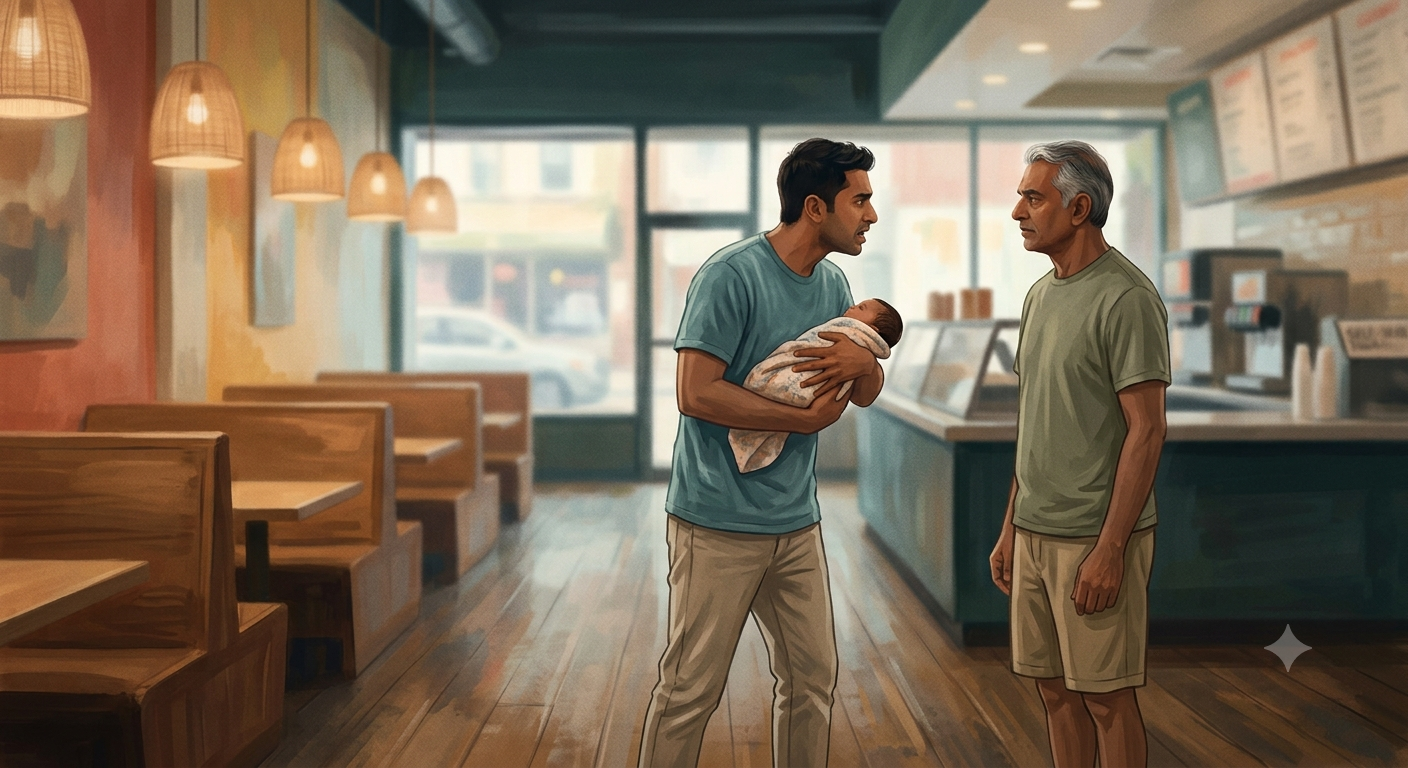
<p>It was mostly in English, threaded with Telugu I couldn't follow, but the shape was unmistakable. The young father, at full volume: "You have no right to touch my son. You ask me first." An older man, caught mid-gesture, told him to calm down. The father wouldn't. The elder's patience snapped and he fired back something in Telugu, a curse I'd guess. Words for words. Then the threat: I'll call the cops. A restaurant full of people who came for a relaxed Friday sat and watched two educated men set fire to the evening. The police did come. By then the heat had burned itself out, and we walked to the car.</p>
<p>I've turned it over since. Where we come from, an elder pinching a baby's cheek and calling it cute isn't an assault. It's affection, almost reflex. That older man had probably flown in from India, stepped into an Indian restaurant, saw an Indian baby, and his hands moved before his mind did. The young father, guarding a months-old child from every stray germ, read that same reflex as a violation. Neither was evil. Both were sincere. Both were wrong.</p>
<p>There's a whole industry of influencers now coaching young parents to let no one touch the baby. What none of them teach is the harder half. How do you say it to an elder without wounding him? That skill is missing, and it's the one that matters. The father could have leaned in gently and said, uncle, he's so small, we're being careful right now. The elder, once the yelling started, could have let it go and walked away, but his ego wouldn't allow it, because in his own mind he'd done something loving, not wrong.</p>
<p>We live at a strange crossroads, no longer fully Indian and not yet American. When we borrow the West's boundaries, we forget to carry along the tenderness our own tradition demands for the way we deliver them. Valluvar named the missing move two thousand years ago.</p>
<blockquote>
<p><strong>மிகுதியான் மிக்கவை செய்தாரைத் தாம்தம்</strong></p>
<p><strong>தகுதியான் வென்று விடல்.</strong></p>
<p><em>Mikutiyāṉ mikkavai ceytārait tāmtam</em></p>
<p><em>takutiyāṉ veṉṟu viṭal.</em></p>
<p>Thirukkural 158, from the chapter பொறையுடைமை (poṟaiyuṭaimai), forbearance</p>
</blockquote>
<p>When someone wrongs you out of excess, you win by your own dignity, not by matching his heat. Each man had that victory within reach. Both traded it away for noise.</p>
]]></content>
        <author>
            <name/>
            <uri>https://saltpanthoughts.com/</uri>
        </author>
        <published>2026-08-05T00:00:00.000Z</published>
    </entry>
    <entry>
        <title type="html"><![CDATA[Nothing Equal to It]]></title>
        <id>https://saltpanthoughts.com/posts/nothing-equal-to-it/</id>
        <link href="https://saltpanthoughts.com/posts/nothing-equal-to-it/"/>
        <updated>2026-07-23T00:00:00.000Z</updated>
        <summary type="html"><![CDATA[on Kural 621, a dental chair, and what trouble is actually for.]]></summary>
        <content type="html"><![CDATA[<p>My son sat through a dental procedure last week without a fuss. A few years ago a haircut took weeks of preparation and usually ended in screaming anyway. My wife and I were talking about this over tea yesterday evening, and somewhere in that conversation we realized we had crossed something. Nothing is finished; there is a long road still. But we had crossed something.</p>
<p>What struck me more than the progress was how it felt. A dental appointment is not an achievement. To most parents it is a line in the calendar. For us it was enormous, and the only reason it was enormous is that we had spent years on the other side of it. The difficulty is what gave the ordinary thing its weight. Had our son been neurotypical, that afternoon would have passed and neither of us would have noticed it at all.</p>
<p>That pushed me back toward a question I keep circling. People talk about peace as the thing to aim for, and I have never fully accepted it. The peace I usually see described is reached by subtraction. You withdraw from the noise, cut your attachments, sit somewhere quiet, and then report that you have found it. Anyone can be calm in an empty room. The harder question is whether you can live inside a marriage, a household, a child who needs you, the ordinary weight of work and money and time, and still find something worth calling joy. That seems to me the real test, and I have not passed it yet.</p>
<p>I would also like to work this out at a reasonable hour. At twenty-five you have not seen enough to hold an opinion worth having. At seventy-five the answer may finally arrive, but by then the question has stopped mattering. Forty feels like the age at which a person should at least know which direction he is facing. Whether that is possible I am not sure, because life keeps interrupting the effort. It knocks you down, treats you unfairly, and offers no explanation. I have found no consolation for that part. I am still looking.</p>
<p>What I have found is a line.</p>
<p><img src="/images/in-person.png" alt="_a figure walks through a narrow passage between cliffs into open light" /></p>
<blockquote>
<p><strong>இடுக்கண் வருங்கால் நகுக அதனை</strong></p>
<p><strong>அடுத்தூர்வது அஃதொப்ப தில்.</strong></p>
<p><em>Iṭukkaṇ varuṅkāl nakuka ataṉai</em></p>
<p><em>aṭuttūrvatu aḥtoppa til.</em></p>
<p>Thirukkural 621, from the chapter இடுக்கணழியாமை (iṭukkaṇ azhiyāmai), not breaking under adversity</p>
</blockquote>
<p>The usual translation is mild: when trouble comes, laugh. Read that way it sounds like advice to keep your chin up, and it never held much for me. The words themselves are not mild.</p>
<p>இடுக்கண் (iṭukkaṇ) is not a general word for sorrow. It is built from இடு (iṭu), meaning narrow or pinched, and கண் (kaṇ), meaning place or state. A constricted place. The condition of being cornered with nowhere left to move. நகு (naku) does not mean chuckle. In Sangam usage it is what light does, what a flower does when it opens, and what a warrior does on a battlefield when he wants the other man to understand he is not afraid. Then the second line turns. அடுத்து (aṭuttu) is the war word for pressing on an enemy without letting up. ஊர்வது (ūrvatu) is to mount and ride over, a chariot going across whatever is in its way. அஃதொப்பதில் (aḥtoppatil) means there is nothing equal to it.</p>
<p>So the Kural is not saying that laughter is a comfort while you endure. It is saying that going at the trouble, pressing it, riding over it, that there is nothing on earth comparable to it. The laughter is the opening move, not the consolation prize. You laugh because of what you are about to do to it.</p>
<p>That is the part that reached me. What my wife and I have is not endurance and it is not acceptance. Every one of those small wins, the haircut, and then years later a dentist's chair, was something we went at and wore down. And there is no feeling I can set beside it. Not comfort, not calm, not any pleasure that arrived without being fought for. Nothing equal to it. Valluvar had already said so.</p>
<p>A life with only joy would leave you nothing to measure by. You would not recognize joy when it came, because nothing would stand against it. Nobody is offered that life anyway. What is actually on offer is the choice of how you meet trouble when it arrives, and the answer here is to meet it already smiling, because you know what is coming for it.</p>
<p>That is what my wife and I have been handed. It is what keeps me going.</p>
]]></content>
        <author>
            <name/>
            <uri>https://saltpanthoughts.com/</uri>
        </author>
        <published>2026-07-23T00:00:00.000Z</published>
    </entry>
    <entry>
        <title type="html"><![CDATA[Nothing Owed, Everything Given — What Thirukkural Adds to Elon Musk]]></title>
        <id>https://saltpanthoughts.com/posts/nothing-owed-everything-given/</id>
        <link href="https://saltpanthoughts.com/posts/nothing-owed-everything-given/"/>
        <updated>2026-07-18T00:00:00.000Z</updated>
        <summary type="html"><![CDATA[on Musk's tweet about children, and what Valluvar completes.]]></summary>
        <content type="html"><![CDATA[<p>Elon Musk once tweeted:</p>
<blockquote>
<p>My children didn't choose to be born, I chose to have children. They owe me nothing, I owe them everything.</p>
</blockquote>
<p>Felt right at first — pure, unconditional love, no score-keeping. But it felt like half a thought.</p>
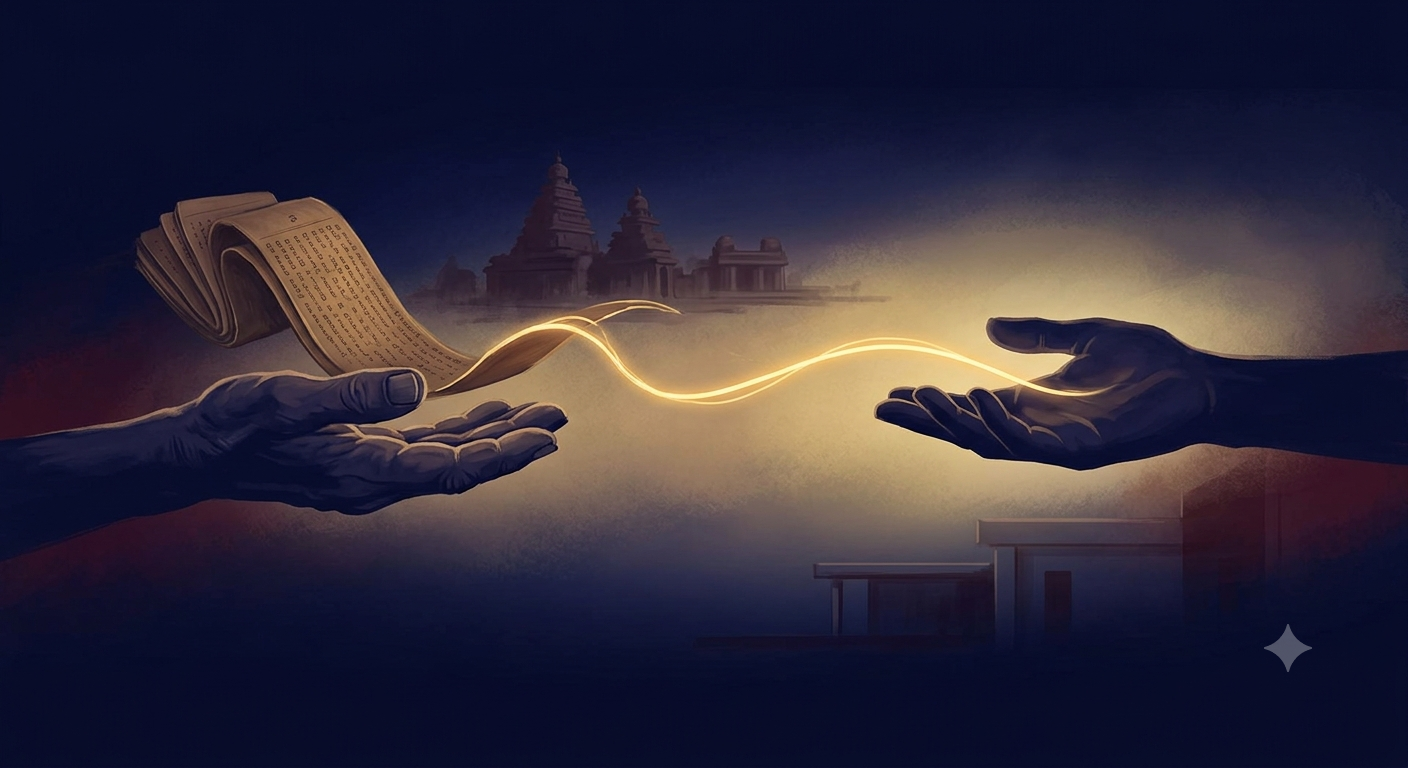
<p>But Tamil literature spoke about the missing part.</p>
<p><img src="/images/nothing-owed.jpg" alt="_Two hands across a golden thread of light, one offering an ancient Tamil manuscript, temple silhouette in the background" /></p>
<p><strong>குறள் 67:</strong></p>
<blockquote>
<p>தந்தை மகற்காற்றும் நன்றி அவையத்து<br />
முந்தி இருப்பச் செயல்</p>
</blockquote>
<p>A father's duty: raise his son to take the front seat among the wise. Total, unconditional, one-way. Valluvar said something very similar. But குறள் 70 then completes the other half.</p>
<blockquote>
<p>மகன்தந்தைக்கு ஆற்றும் உதவி இவன்தந்தை<br />
என்நோற்றான்கொல் எனும் சொல்</p>
</blockquote>
<p>The help a son can offer: to live such that people ask, "what penance did this man do, to deserve a son like this?"</p>
<p>Notice — உதவி, not கடன். Help, not debt. The son owes nothing. But if he chooses, the finest thing he can still do is live so well that the world credits his father.</p>
<p>Musk stopped at nothing owed. Valluvar said it fully.</p>
<p>Nothing owed. What comes next is a gift, not a debt. 🙏</p>
]]></content>
        <author>
            <name/>
            <uri>https://saltpanthoughts.com/</uri>
        </author>
        <published>2026-07-18T00:00:00.000Z</published>
    </entry>
</feed>